Ronan Breslin at the Royal College of Art: The Art of Song and The Tenementals
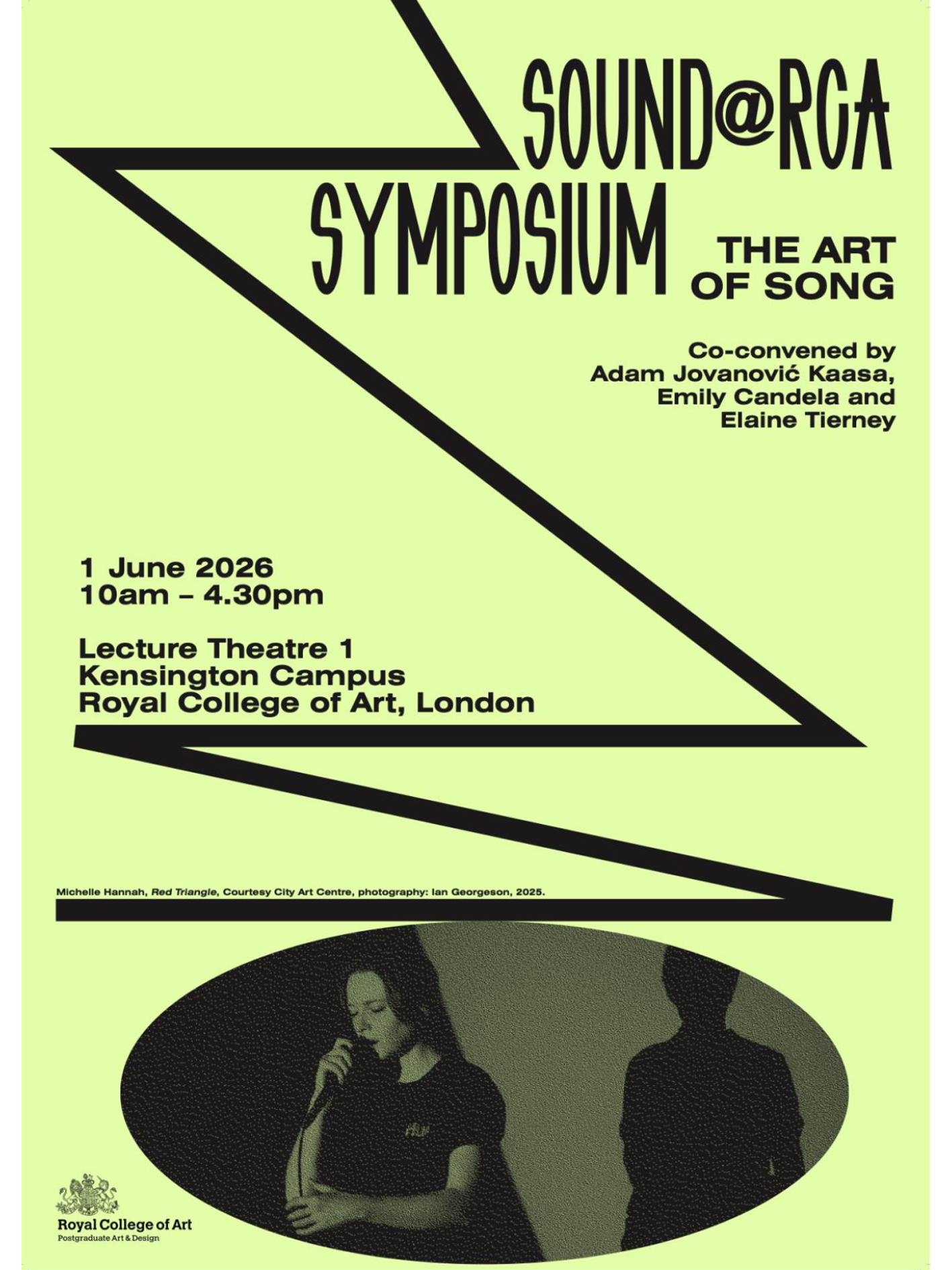
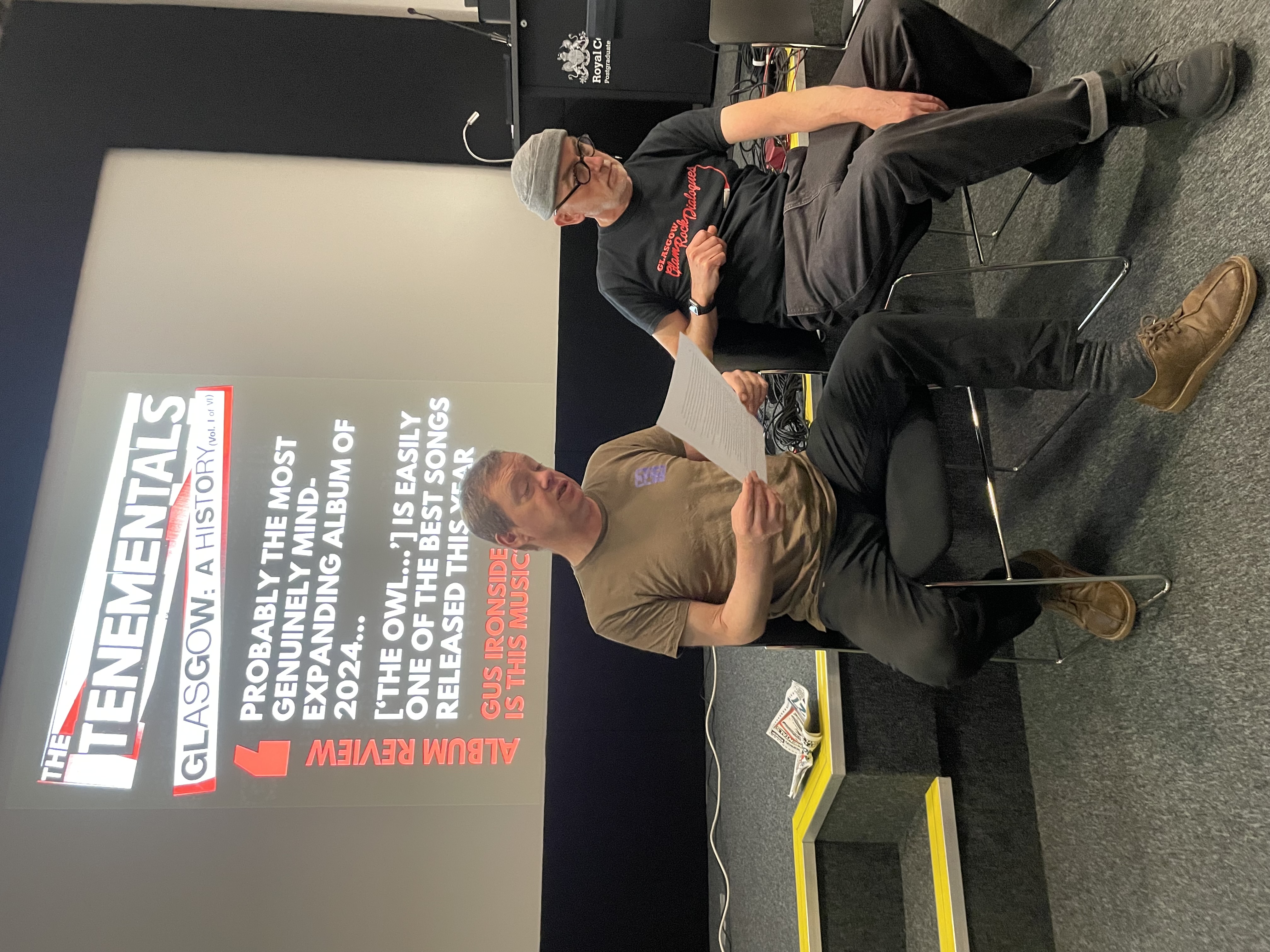
Ronan Breslin, Programme Leader for MDes Sound for the Moving Image, recently participated in a panel at the Royal College of Art (RCA), London, for a one-day symposium titled The Art of Song. Alongside colleagues from The University of Glasgow, Ronan discussed the ethos, philosophy, and impact of The Tenementals—an intergenerational group of academics, musicians, and artists who have recorded an album of songs relating a transmedia radical history of their native Glasgow.
Song as a Mode of Inquiry
Co-convened by Adam Jovanović Kaasa, Emily Candela, and Elaine Tierney, the RCA symposium explored song as a form, structure, and mode of inquiry within contemporary art and research. While academic sound practices often foreground abstraction, experimentation, and sonic materiality, The Art of Song focused on how the medium operates differently. By centering on voice, language, and repetition, the symposium asked what song does—how it communicates, carries narrative and memory, and produces relations between people, histories, and publics.
Making History with The Tenementals
During their panel presentation, titled ‘21 Theses on The Tenementals #5’, the group provided an in-process account of their expansive work.
Operating within an ‘indisciplinary’ framework, The Tenementals draw from Politics, History, Popular Music Studies, Critical Theory, Feminist Studies, and Film Studies. Their primary intervention lies at the intersection of Music and History, exploring the extent to which song-making can be regarded as an expanded notion of historical record. Their central research question asks: “What would History look, sound, and feel like if it were created by a rock band?”
The resulting transmedia history spans songs, music videos, podcasts, academic essays, installation art, and band ephemera. The project actively refuses the established binary between the critical and the creative, ensuring no single form of output is prioritized over another.
Wild Research and Radical Pleasure
Described as a "Wild Research" project, The Tenementals maintain one foot in the university sector and the other in Glasgow’s vibrant music scene. Moving to its own beat, the project runs on the logics of a rock band rather than metricized institutional frameworks, seeking to carve out spaces of pleasure in alienated environments as a radical act.
Strongly aligned with the labour movement, the band has performed at numerous progressive and political events, including May Day rallies and Palestine fundraisers, and has worked alongside figures such as former RMT leader Mick Lynch and actor Maxine Peake.
The Tenementals' debut album has garnered significant critical and popular acclaim, including multiple scholarly reviews. Furthermore, the band has achieved major international academic recognition; their cover of the classic German protest song ‘Die Moorsoldaten’ was placed in the archives of the concentration camp where it was first performed, and another of their tracks is currently housed in the Virtual Museum of the Spanish Civil War.
For more information on the project and to explore their transmedia outputs, visit tenementals.com.