MSc students in Medical Visualisation & Human Anatomy at The World-Changing Glasgow 575 Games Jam organised at the University of Glasgow (Nov 2026).
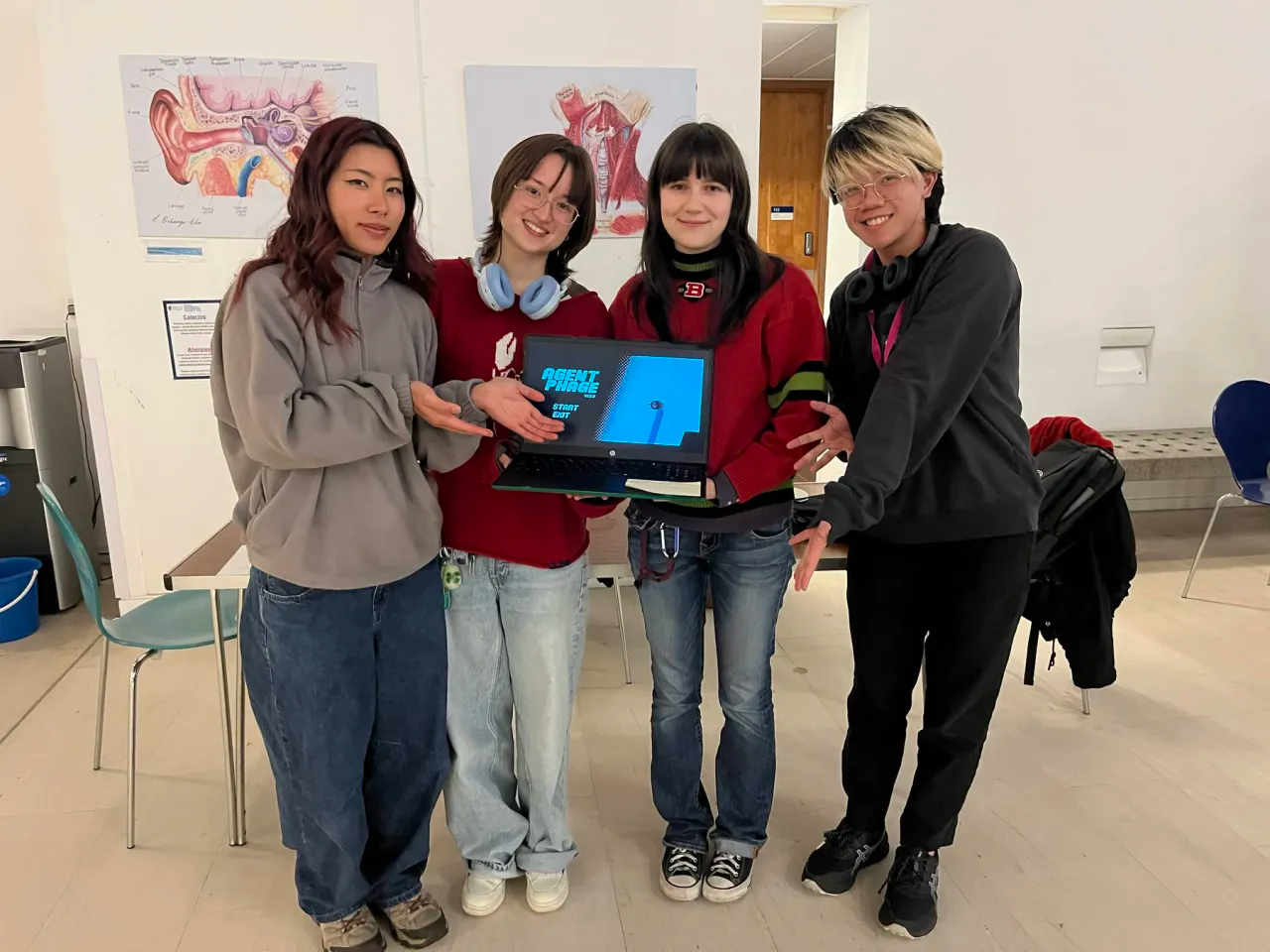
After a few weeks of training in Interactive Development, 3D Modelling and Animation, MSc students, Jeng Shin Ong, Kailee Suess, Maria Tseytlin & Jay Zhang, have created "Agent Phage", a digital game that allows you to control a M13 bacteriophage engineered to kill cancer cells.

Throughout that game, you must use M13 bacteriophage to catch the metastasised cell made by King Karcinoma before it spreads across the body, while doing your best to dodge the red blood cells and avoid getting caught by the Killer T cell!
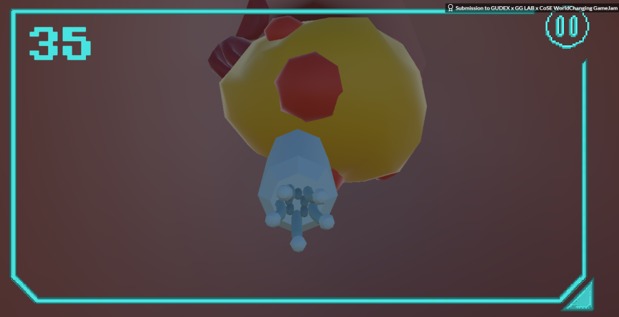
This development, inspired by bold thinking, builds upon the scientific literature.
Traditional cancer treatments can be expensive, display off-target effects, and vary in levels of efficacy from patient to patient. One alternative being developed is to use bacteriophages, or phages, as a personalised vehicle for drug delivery. Even though these viruses are designed to infect bacteria, they can be “reprogrammed” to target cancer cells (Islam, Fan and Fan, 2023). The M13 filamentous phage (Agent Phage) is one example of phages currently being tested. Peptides can be attached to the M13 gp3 protein which allows the phage to bind to specific cell receptors found on cancer cells. This interaction allows the phage to be endocytosed, or internalised, delivering a treatment that kills the cell (Foglizzo and Marchiò, 2021).
It is always exciting to witness the creative collision of art, engineering, and life sciences at the Glasgow School of Art.
Play Agent Phage here: https://pocketwyrm.itch.io/agent-phage
Congratulations to Jeng Shin Ong, Kailee Suess, Maria Tseytlin & Jay Zhang

References
Islam, M.S., Fan, J. and Pan, F., 2023. The power of phages: revolutionizing cancer treatment. Frontiers in Oncology, 13, p.1290296.
Foglizzo, V. and Marchiò, S., 2021. Bacteriophages as therapeutic and diagnostic vehicles in cancer. Pharmaceuticals, 14(2), p.161.