PROJECT OVERVIEW
This year, the Transformation Design cohort at The Glasgow School of Art partnered with Juliet Fellows-Smith, Manager of The Burrell Collection, to explore how design can support nature-culture climate action and contribute to Glasgow’s transition toward a zero-carbon, biodiverse and socially just future. Globally, cultural institutions are being called to rethink their roles in light of the climate crisis. Beyond reducing emissions or adopting sustainable operations, there is increasing recognition of their potential to foster climate resilience, support adaptation and contribute to regenerative futures. Museums and galleries are uniquely positioned in this landscape: they care for collections that embody both material and intangible heritage, communicate narratives of environmental change and create spaces that can influence public understanding and behaviour.
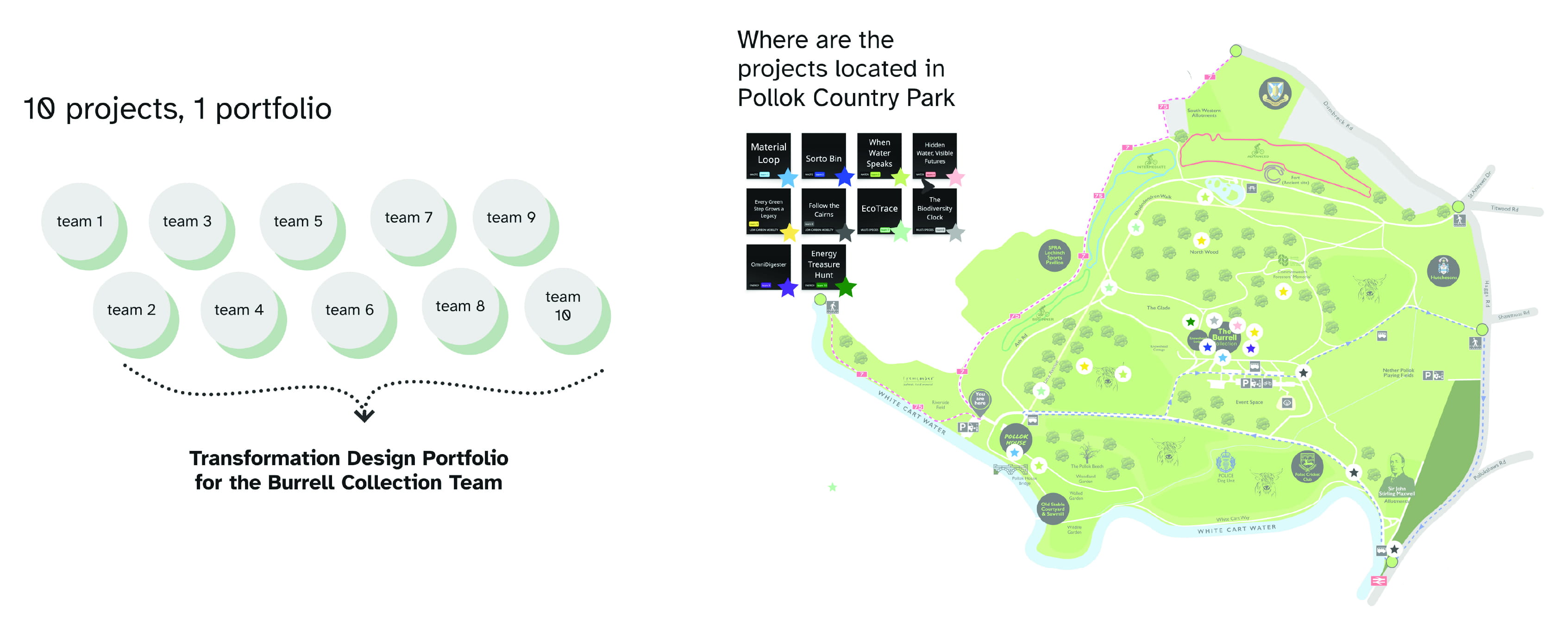
The Transformation Design programme teaches students ways to engage with complexity through creative and systems-based approaches. It emphasises working across scales of change as a material practice, connecting global challenges to lived experience and local contexts. In this project, global climate challenges were localised to Pollock Country Park as both a vital nature-based ecosystem for the city of Glasgow and the setting for The Burrell, renowned for its global art and artefact collections. Together they represent a living intersection of nature and culture – a site where environmental stewardship and cultural engagement meet. Working in 10 teams, the students investigated interconnected themes - waste, water, low-carbon mobility, multi-species and energy - as entry points to explore key priority areas for the partner and wider systemic issues outlined in the Glasgow Climate Plan (including accelerating action to reduce emissions, restoring biodiversity, and building a more climate-resilient city, with a target of achieving net-zero carbon by 2030).
.jpg)
The Burrell’s key priority areas for sustainability.
PROJECT OUTCOMES: 10 TRANSFORMATION DESIGN PROPOSALS
In collaboration with members of The Burrell team, ecological expert input and with the park setting itself, over 12 weeks the students developed a portfolio of Transformation Design proposals, materialised through concept prototyping and presented below, that reimagined what it means for a cultural institution to be climate responsive, adaptive and restorative.
Energy Treasure Hunt
Project Team: Shiying Guo, Ruitong Liu, Hua Guo, Yixiang Wang, Liunan Shang
This project explored how The Burrell can make energy systems more visible, engaging and educational for young visitors. Drawing on research into bioenergy and circular practices and centering visitors’ engagement between the park and the museum, the team developed ‘Energy Treasure Hunt’: an interactive experience combining outdoor exploration with indoor digital learning. Visitors collect clues and tokens across the park, identifying different energy sources and uncovering visible and hidden energy cycles. The aim of this concept was to build energy literacy, inspire low-carbon behaviours and position The Burrell as a model for a climate-engaged cultural institution.
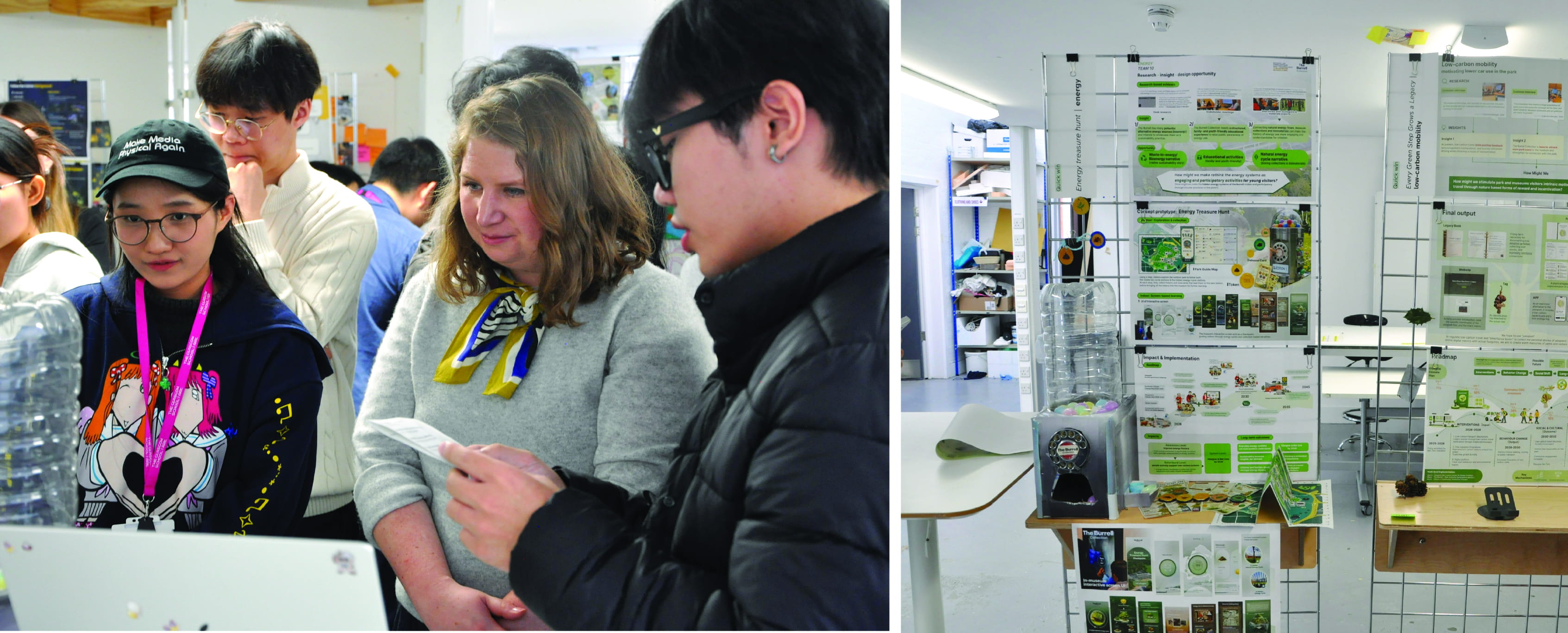
Every Green Step Grows a Legacy
Project Team: Junjie Song, Xinyi Yang, Yihe Xin, Yi Zhang, Keyin Chen
Focusing on reducing car use in the park, this project explores ways to encourage visitors to shift their habits towards low-carbon forms of transport through nature-based incentives and emotional engagement. ‘Every Green Step Grows a Legacy’ proposes a system of interconnected interventions, including a ‘low-carbon passport’, a tree adoption programme, a digital platform, and physical markers across the park. Visitors are rewarded for sustainable travel choices through incentives such as free coffee and the opportunity to adopt a tree, fostering personal connections with nature while tracking their low-carbon mobility impact. The project aims to encourage positive behaviour change whilst strengthening human–nature relationships and community stewardship.

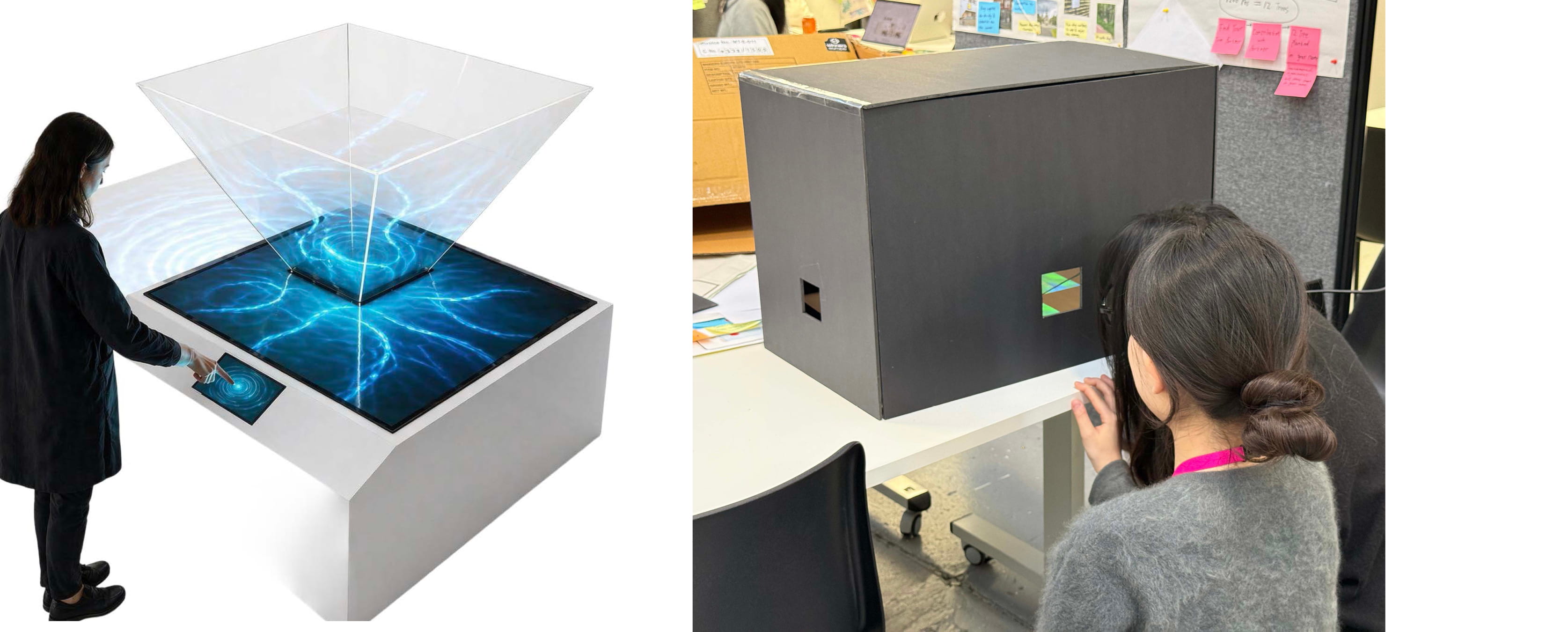
When Water Speaks
Project Team: Jinsong Kang, Chuwei Chen, Wenxuan Hiu, Ardhiya Widyadana, Xiaobo Li
Addressing how ecological signals in water systems can be made more tangible for museum audiences, this project translates environmental data into interactive storytelling. ‘When Water Speaks’ is an immersive installation that connects human actions with ecological responses, translating real-time data into visual, audio and sensory feedback. The aim of the engagement is for visitors to experience consequences of human impacts on natural ecosystems and trace how this has changed over time, so to encourage more responsible environmental behaviours. The ambition for this proposal is to explore how this prototype could be developed to enable more inclusive and ecologically attuned approaches to decision-making through amplifying other-than-human experience and perspectives.
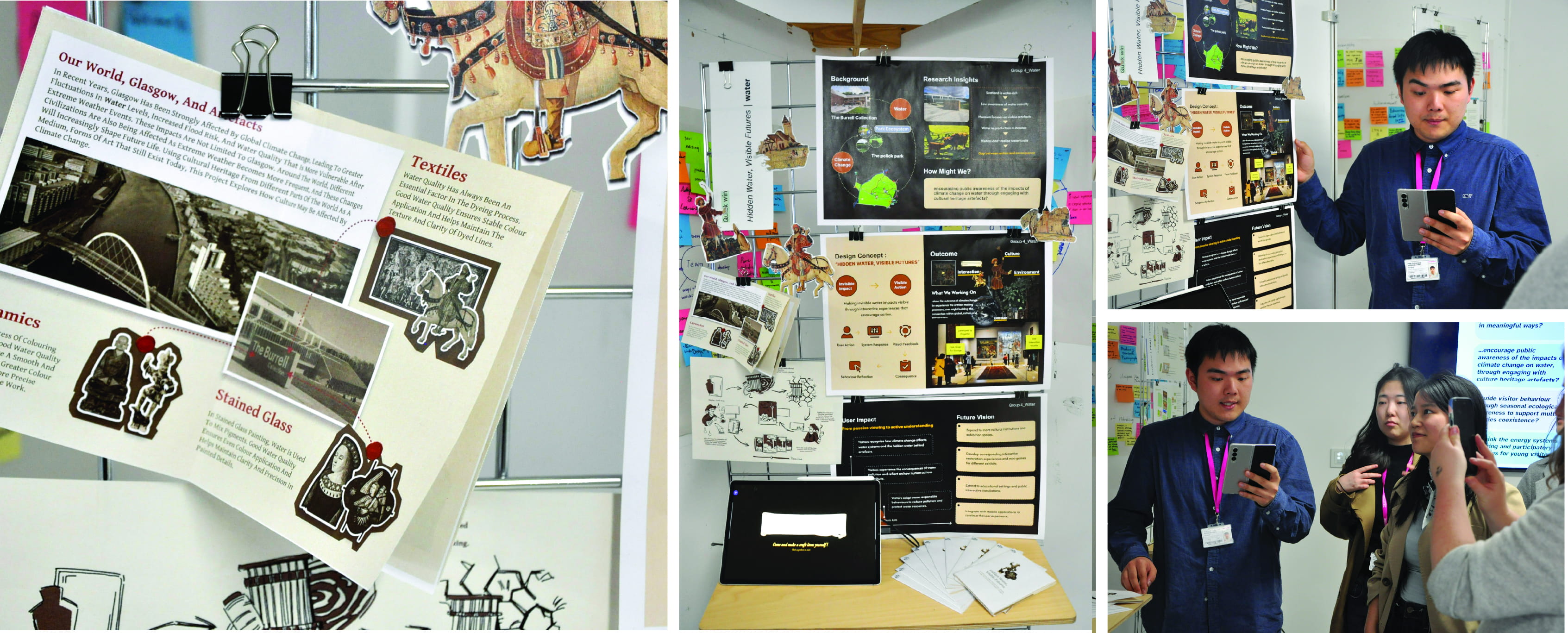
Hidden Water, Visible Futures
Project Team: Tong Xu, Hao Liang, Shuangshuang Zhang, Junjie Qin, Xiang Li
This project explores how The Burrell could harness its collections to raise awareness of climate impacts through engaging with cultural heritage artefacts. ‘Hidden Water, Visible Futures’ is an interactive experience that reveals the, often hidden, use of water in artefact production and environmental systems through animation and game-based engagement. This concept prototype seeks to bridge the gap between action and consequence through building more of an awareness and insight into how water has been used in the material composition and what this might look like in the future, encouraging more responsible behaviours and offering a scalable model for museums to engage audiences with sustainability stories told through objects in their collections.
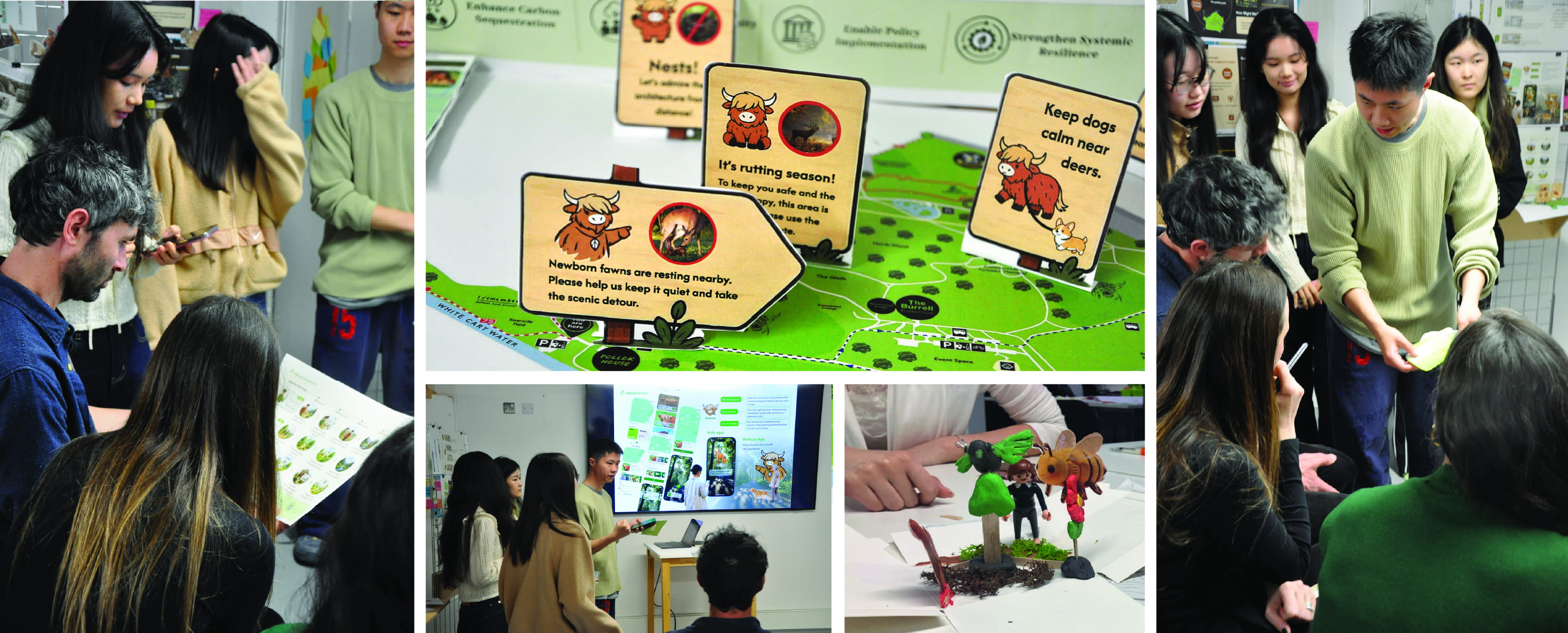
EcoTrace
Project Team: Xinyan Gao, Yilin Jia, Yinhan Lu, Zilin Zhang, Qingxiang Mu
Responding to the need for more sensitive engagement with natural systems, this project considers how visitor behaviour in the park can be guided through ecological awareness and seasonal zoning strategies. It proposes an app-based augmented reality (AR) navigation system, ‘EcoTrace’, which overlays real-time ecological data onto visitor wayfinding in the park, directing users away from sensitive zones at different times in the year (such as breeding areas and habitats more sensitive to human intervention). Users can also input data into the app as a form of citizen science. The experience encourages a shift from passive observation to more mindful, responsive park use, with the aim to foster a greater sense of coexistence and conviviality between visitors and its multi-species inhabitants.
The Biodiversity Clock
Project Team: Jie Chen, Yifan Zhu, Yunjie Wang, Xuanqi Si, Muxuanzi He, Shunxin Liu
This project explores how The Burrell can enable visitors to experience the museum and the park from a non-human perspective. The ‘Biodiversity Clock’ is an interface that views time through an ecological lens by visualising past, present and future seasonal rhythms and resultant behaviours of different species. As part of the experience, users receive interactive receipts as outputs, supporting their own self-led discovery of natural species across the park and the museum’s collection, and encouraging reflection on nature. A smaller display also highlights ecological activities currently available in the park. This experience highlights ways to reduce human disturbance and support efforts to reverse nature decline while positioning The Burrell as an active mediator in fostering long-term relationships between people and the natural environment.

Follow the Cairns
Project Team: Tong Xu, Yiguo Xu, Yanting Zhang, Dongqiao Zhuang, Yiyang Wu
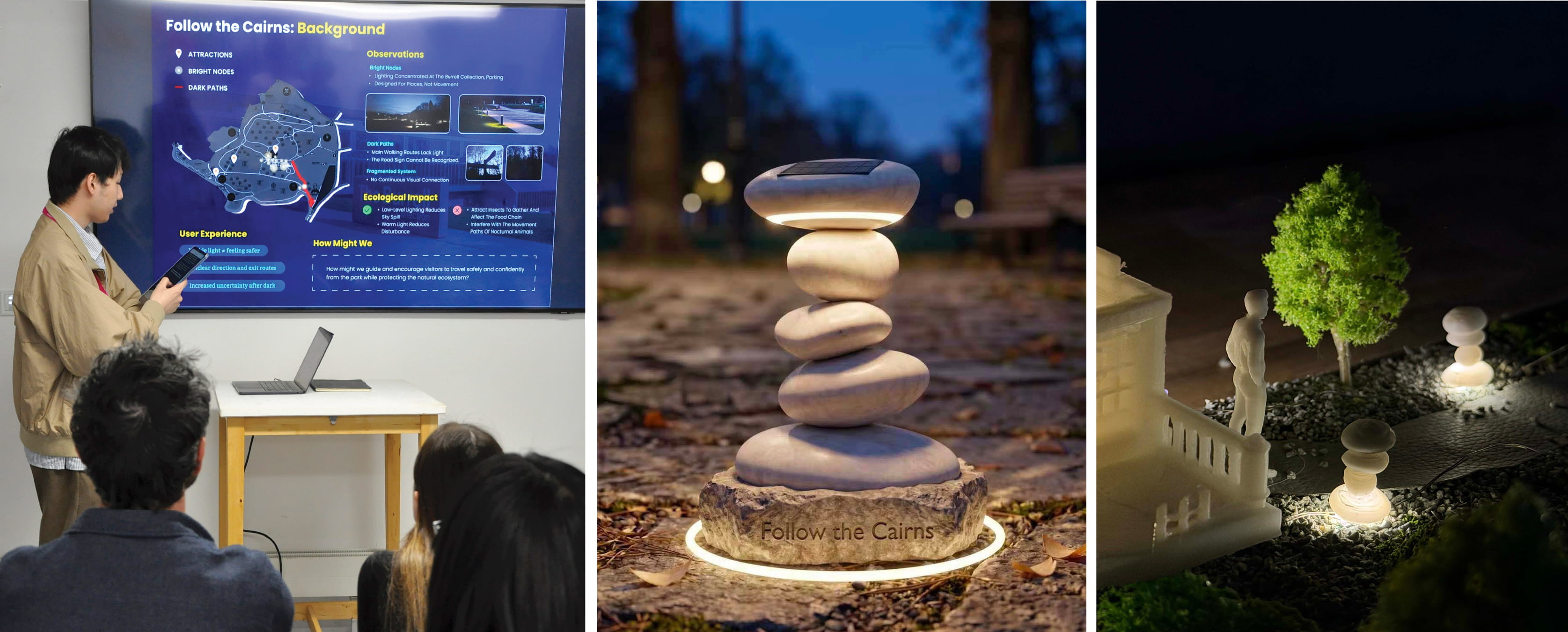
Addressing the challenge of night-time navigation, this proposal considers how The Burrell can better support cyclists and pedestrians leaving the park whilst minimising ecological impact. Promoting safe, low-carbon modes of travel, ‘Follow the Cairns’ encourages more sustainable commuting behaviours. The concept introduces a winter ‘smart lighting’ system composed of stone-like stacked forms inspired by traditional Scottish cairns. These solar-powered sculptural markers are softly illuminated from within, casting a diffused glow that enhances visibility without using stark and artificial light that can disturb nocturnal wildlife. Positioned at regular intervals along key routes, they act as trig points to support wayfinding towards the park exits. The smart system seeks to work in harmony with nature whilst supporting safer and more sustainable movement through the park.
Sorto
Project Team: Ce Xu, Gong Chen, Xiaoyu Chen, Jiatong Zhang, Jiakai Liang
Focusing on how waste disposal systems in the museum can become more visible, efficient and engaging, this proposal considers how The Burrell can better involve both visitors and staff. It introduces Sorto, an AI-assisted sorting bin that guides users toward correct recycling decisions through real-time feedback and interactive prompts. By integrating physical interaction with intelligent sorting and reward-based incentives, the system transforms waste disposal into a more participatory experience. The project seeks to address the persistent issue of mixed waste and recycling, where contamination can compromise entire recycling streams, increase landfill dependency and undermine circular efforts, positioning the museum as an active agent in fostering more responsible and sustainable habits of its visitors.

OmniDigester
Project Team: Tong Wu, Hanqin Yao, Xumeng Mao, Yue Wang, Qingwei Tang
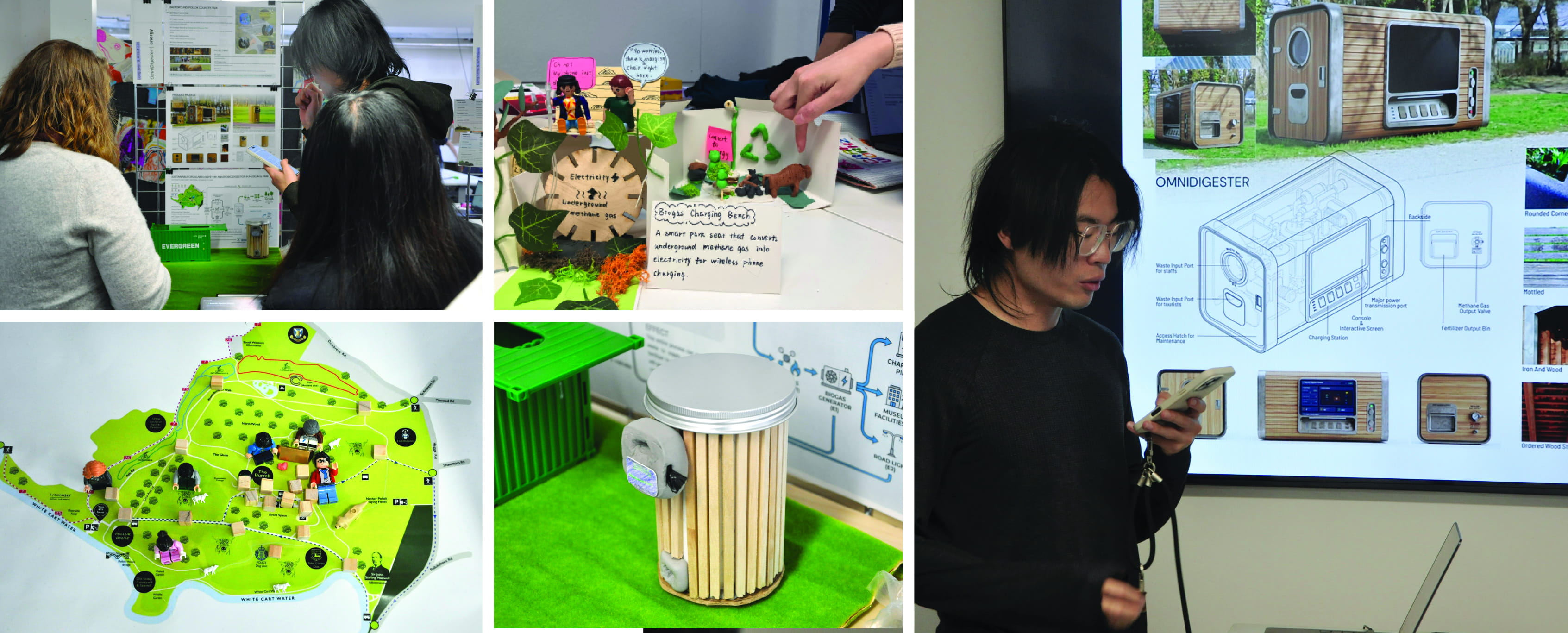
Reimagining waste as a resource, this project proposes a circular bio energy system for The Burrell and park. It introduces an ‘anaerobic digestion’ system, consisting of interactive receptacles to collect dog waste, which are connected to a central energy production point used to convert organic waste into bio-gas and fertiliser. By making waste collection participatory and engaging through interactive screens, the ‘OmniDigester’ encourages park visitors’ responsible behaviours while generating clean energy to power park and museum facilities. The project aims to reduce the presence of dog waste and establish a scalable, self-sustaining source of renewable energy to also lower operational costs.
Material Loop
Project Team: Jianlin Chen, Wenxin Yang, Ruijia Mao, Yixin Wang, Chongzen Wang
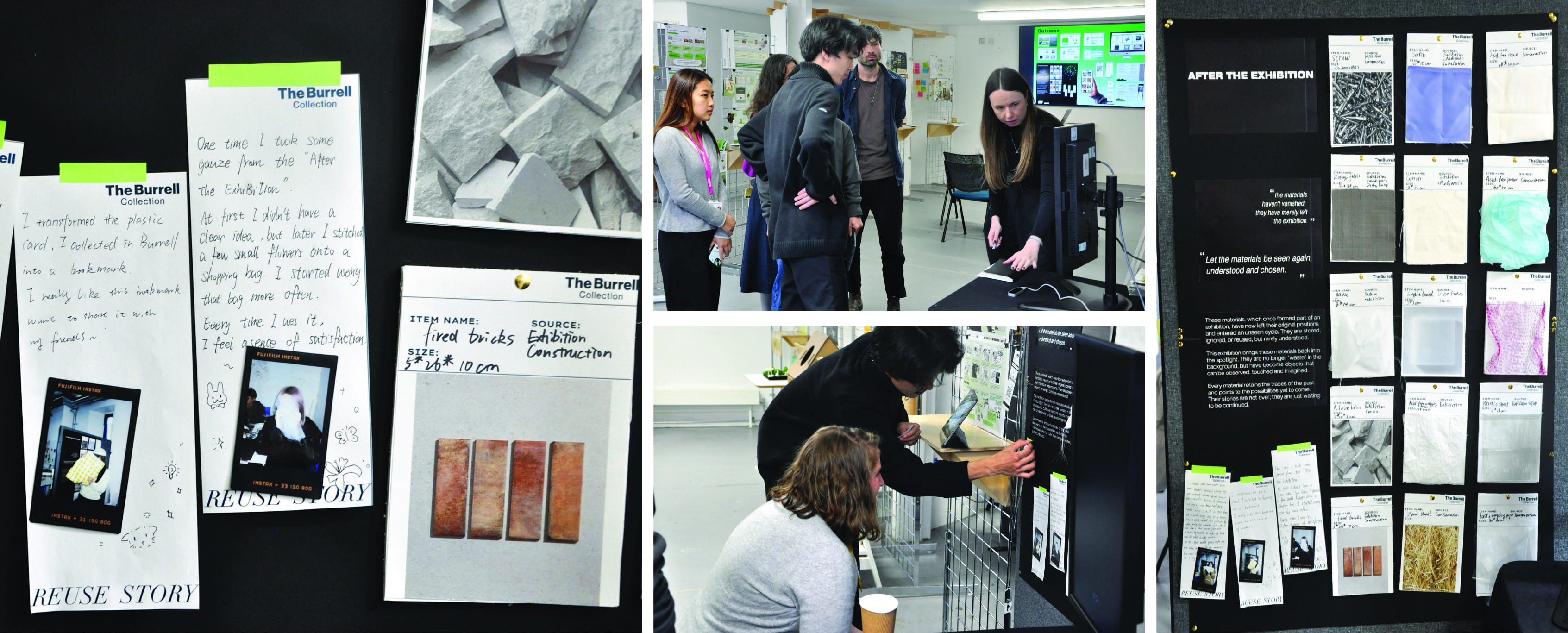
This project explores how cultural institutions like The Burrell can repurpose exhibition waste by creating a circular system for reusing and redistributing materials across the city. It proposes ‘Material Loop’, a platform that connects museums, local organisations, and the public to repurpose exhibition materials through a shared digital and physical network. By cataloguing materials, enabling exchanges and introducing a ‘Material Library’ within the museum itself, the system makes waste visible and accessible. Users can request and reuse materials while sharing their stories, fostering engagement and accountability. The project aims to reduce waste and promote sustainable practices across Glasgow’s cultural sector.
TRACING CHANGE & CAPACITY TO IMPLEMENT
Beyond these design proposals, the students also developed practices for effectively socialising their concepts with external partners and audiences in ways that are useful and usable. This meant placing particular emphasis on two core aspects of transformation practice: ‘implementability’ and ‘explainability’. The intention was twofold: on one hand, students developed practical skills to position and communicate their individual proposals, exploring tools such as theory of change, pilot testing, innovation adoption strategies, change mapping and the crafting of compelling narratives. On the other hand, equal attention was given to the experience of handover and delivery, with the ambition of presenting the work not as isolated outputs but as a cohesive innovation portfolio for The Burrell team.
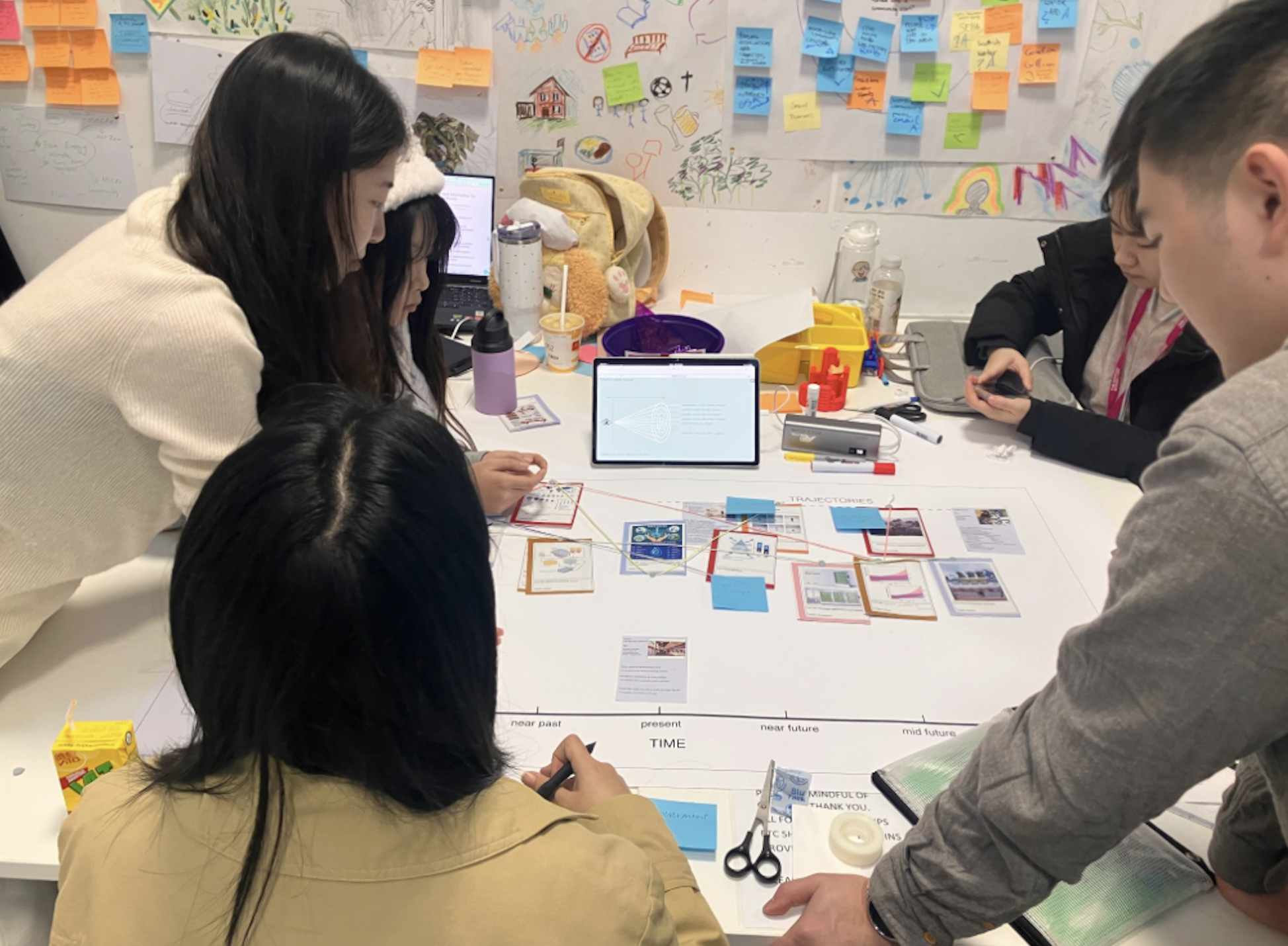
A key exercise involved mapping all projects on an ‘impact versus effort’ matrix, allowing the students to gain a holistic view of the collective body of work. This process enabled the emergence of 3 strategic groupings: Quick Wins (concepts that could be implemented tomorrow, requiring little resource), Mid-Term Opportunities (those that would require further testing and a degree of resource), and Long-Term and Ambitious (proposals requiring greater investment and infrastructure). By framing the projects in this way, the portfolio offered a clear and actionable roadmap for The Burrell team, while also demonstrating how incremental successes could build momentum toward more transformative change.
FINAL REFLECTIONS
Guided by partner and subject expert input, the students engaged with sustainability as a systemic challenge, learning to position non-human actors at the centre of their design process rather than as an afterthought. Input from an ecological expert and an operational manager created a valuable ‘sandbox’ for transformation, grounding ideas in both environmental realities and organisational constraints.
Time emerged as a key concept throughout the project. Early on, expert ecologist Niall Dolan guided students through an exploration of deep time, helping them understand evolution and multi-species coexistence. From an ecological perspective, time is slow. In contrast, Juliet’s operational lens emphasises actionable innovation through small interventions capable of generating impact, but which are required to align with timeframes and priorities of internal and external strategies and policies.

Navigating these contrasting timescales required students to think systemically, considering both long-term consequences and immediate implementation. Through this, they learned to reflect on ripple effects and interconnected systems of change. Ultimately, the project highlighted Transformation Design as a practice that operates across scales, balancing present action with future impact, and reinforcing the importance of designing with both urgency and long-term responsibility in mind.
Dr Marianne McAra & Guilia Fiorista
FURTHER INFORMATION
If you would like to find out more about:
The Burrell Collection
The Transformation Design Programme at GSA